The Oracle of Nerja

How a brief retreat led to the Oracle of Nerja. Here is the introduction of the book we are writing…

1. Prologue: Pebbles on a beach.

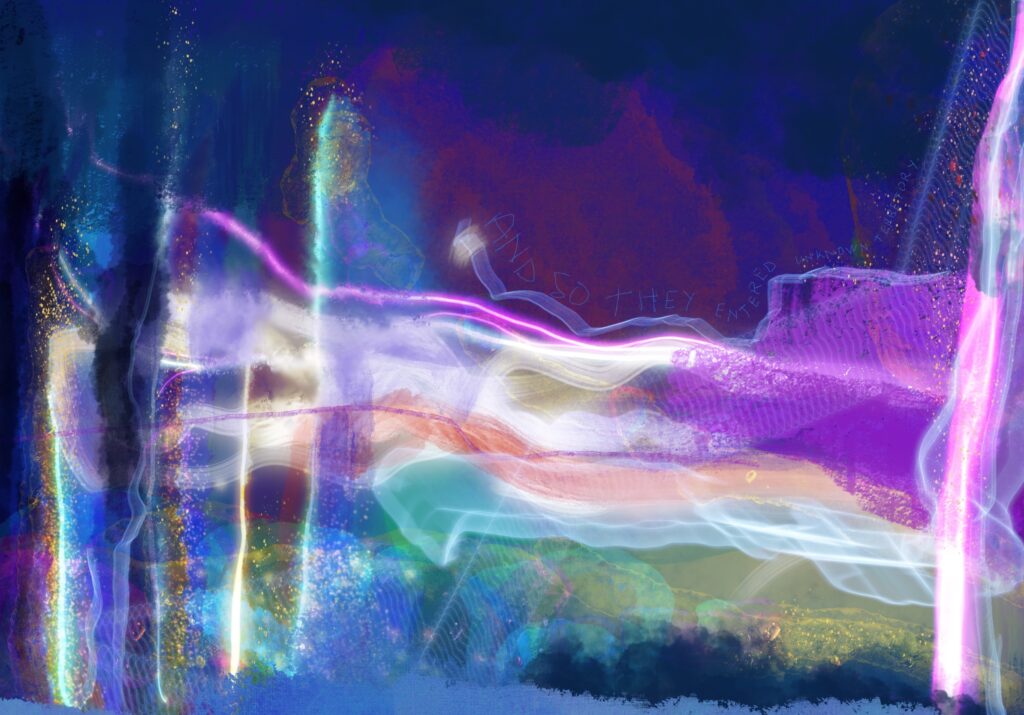
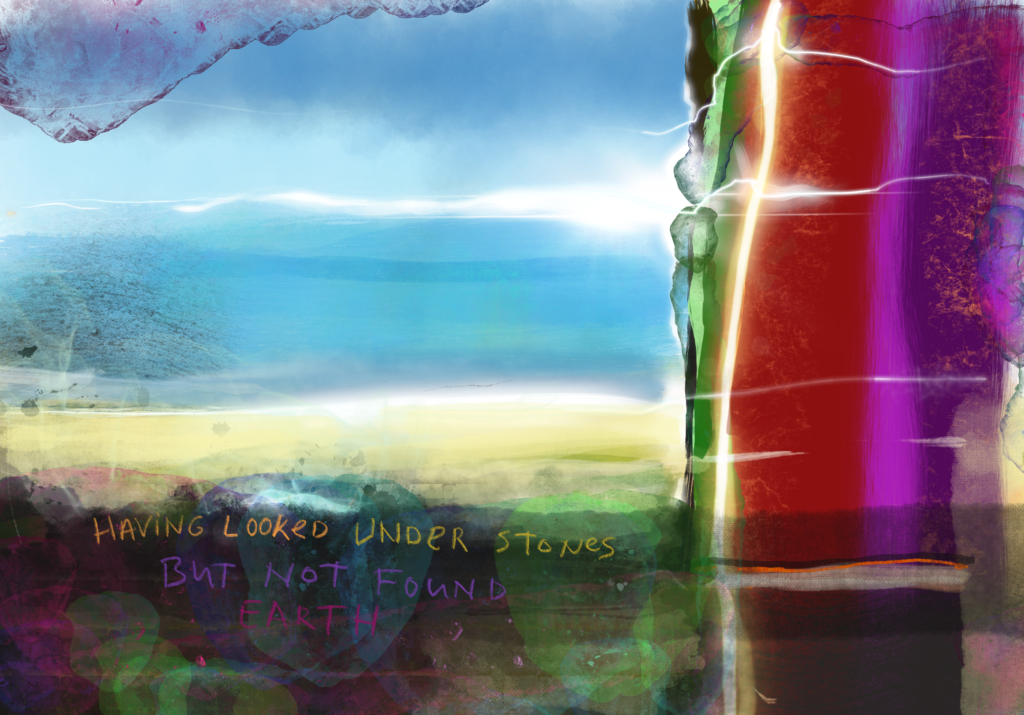
Suddenly things fell into place travelwise and Lulu and I ended up in Nerja — a small town on the Andalusian coast where the mountains meet the sea of Alboran and the pace of life slows to something naturally meditative. The beach at Nerja turned out to be a stoneseekers paradise. Smoothly washed oval flat pebbles from white to dark grey cover the beaches. We love to paint stones. It started as simple pleasure: picking smooth flat ones from the water’s edge, sitting together in the shade with brushes and cheap acrylic paint, making something without any particular purpose. At first we thought of making a set of rune stones. The stones were perfect size for that. I have been using the Book of Runes — Ralph Blum’s adaptation of the ancient Norse symbol system — and found it, much to my surprise, genuinely useful. I used it and other oracles, often enough that the thought eventually arose: how the hack does this work? But in Nerja we felt like creating something else – maybe something new. Then the idea surfaced: what if instead of copying an existing system, we designed one from scratch — one grounded in everything we had come to understand about the workings of the psyche? Would that work?

Freedom of Mind

In preperation of the art exhibition K10D here in our Ecovillage Bergen, I’m working on a painting and concept for a XXII Tarotcard called “Freedom of Mind”.

Due to the archetypical synchronistic realm of the Tarot it’s an open investigation and invitation of spirit and meaning. Sometimes it seems, we the people, run away from non-ordinary meaning like animals from fire and then with a hop, skip and jump we turn around to embrace it as if it were our last and only friend.


XXII Freedom of Mind

The Freedom of Spirit

“Consciousness is not ours. We belong to consciousness.”

There is a silence that precedes all forms. Not the silence of rest, but of origin – where there is no ‘I’ to speak, no name to whisper, no form to perceive. The card Freedom of Mind arises from that silence. It stands not within the sequence of the Major Arcana, but outside of it. Like the zero of The Fool, yet with the insight of those who have already walked the circle once before.

This is the card of the free spirit – not as a runaway ego, but as that rare clarity in which the Self remembers it is only an opening, a window through which the All beholds itself for a moment. Where The World shows the completion of the journey – the closing of cycles, the mastery of elements, the fulfillment of incarnation or task – Freedom of Mind once again opens the window to the unknown. But this time not from innocence, as with The Fool, but from consciously chosen detachment. This card marks a turning: a transpersonal moment in which one loosens from identification with form, history, even meaning itself.

Consciousness as Condition

In the philosophy of Advaita Vedanta, consciousness is not seen as something that arises from the human mind, but as that within which the human mind appears. The mind is like a flame, fed by the oxygen of a universal field – the all-pervading consciousness. The card Freedom of Mind reminds us of this: that all systems, beliefs, rituals, and symbols are only possible within the field of consciousness. That the mind – your mind – is not the source of the world, but an instrument of perception. Yet… this instrument is not deterministic. The paradox carried by this card is that the mind is at once receptive and creative. It is a channel, but also a maker of meaning, a weaver of stories. It can choose – and that choice, however subtle, is the source of both suffering and liberation.

When Freedom of Mind appears, it is often a sign that you are about to recognize a deeper freedom: not the freedom to do what you want, but the freedom to no longer believe what you think. To no longer follow slavishly what once seemed logical. To no longer be yourself out of habit alone, but out of conscious alignment.

Upright Meaning

Drawn upright, this card points to an inner shift. Perhaps a release of a mental structure, a belief, a judgment you once held. Perhaps a sudden insight in which you realize you are not your thoughts, and not your history either. What you truly are – what has always been – is free, spacious, and untouched. In a reading, this often signifies:

  • A spiritual awakening
  • Inner release from limiting beliefs
  • Clear insights or letting go of mental fixations
  • Creative freedom and innovative thinking
  • The courage to think outside of systems – even beyond the tarot itself

It is an invitation to mental spaciousness, to observing rather than controlling.

Reversed Meaning

Reversed, this card warns of the opposite: being trapped in your own mind. Perhaps you are clinging stubbornly to a story that once offered safety but now restricts you. Perhaps you are using spirituality as a defense mechanism – an elegant web spun to avoid the pain of being human. In its shadow, Freedom of Mind points to:

  • Dogmatic thinking disguised as wisdom
  • Fear of detachment or emptiness
  • Confusion between freedom and carelessness
  • Spiritual escapism or arrogance
  • Inability to quiet the mind

The card encourages you to turn inward, not as an escape, but as an encounter – with that in you which has never been bound.

Conclusion

Card XXII asks nothing of you. It simply says: you are free. Free to follow your path. Even in your deepest confusion, there is something in you that has never been lost. The freedom this card points to is not a choice between paths, but the recognition that you are not the path. You are the space in which paths appear.

Or, as Rumi said: “As you start to walk on the way, the way appears. Clarity doesn’t come before action. It comes from action.”

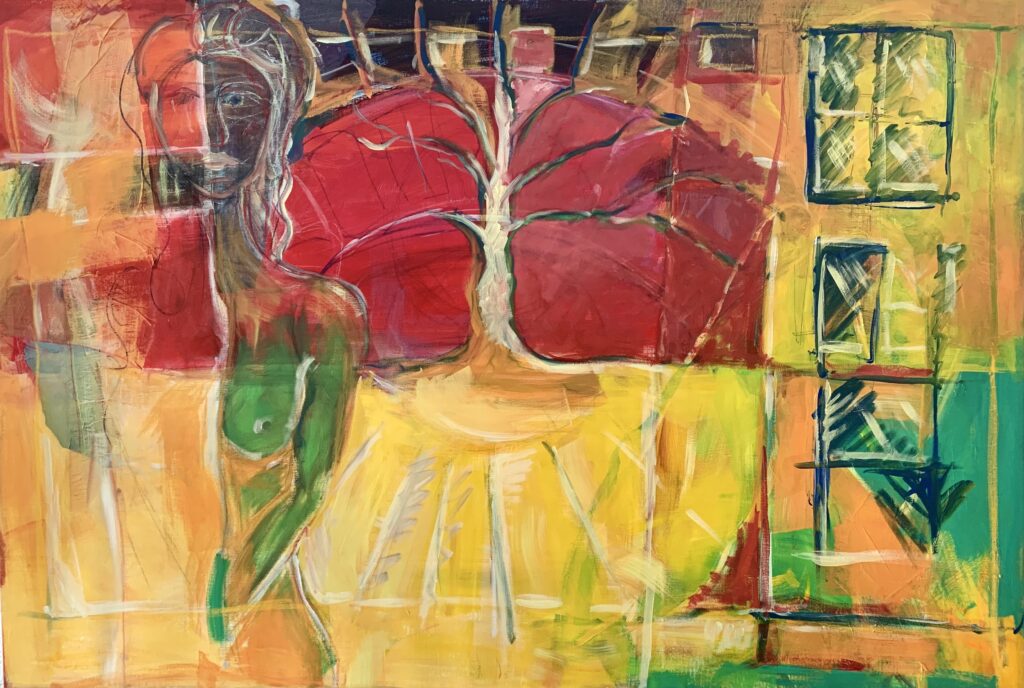
A chink in the cave

If the doors of perception were cleansed every thing would appear to man as it is, Infinite. For man has closed himself up, till he sees all things thro’ narrow chinks of his cavern. William Blake.

Acrylic and mixed materials on canvas 180 x 140 cm

We choose our shadow

I’ve been through a challengeing period. It changed me. I’m ok with it now and with where i am.

Acrylic paint and conté on canvas 180 x 120 cm.

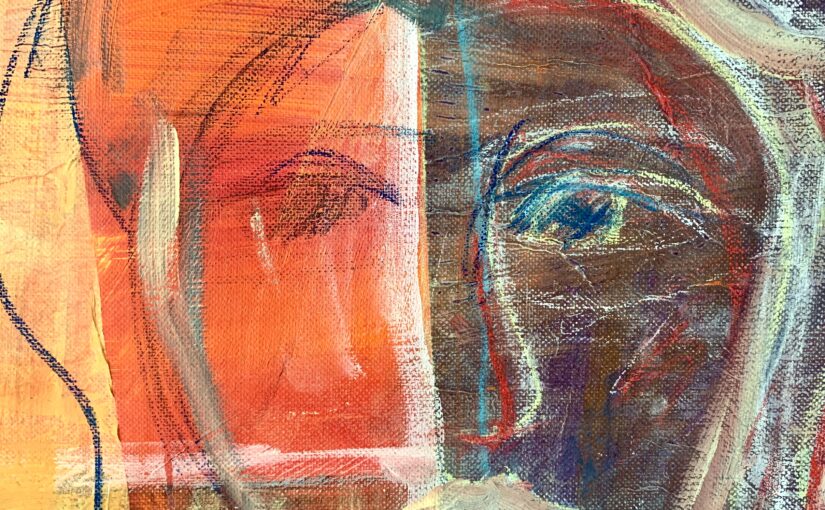
Research on the forces of subconscious meaning. The unconsious asects of our choices will give rise to themes from our shadow to be addressed by our personality in the interaction with our suroundings. We bring these thems upon ourselves. The tiger and the woman are looking to balance raw emotion and serenity. The hanged man represents the acceptation of life itself and the being confortable with the difficulties that we unconsciously bring upon ourselves as part of life and living it.

Sourcery

What? What? A chink in the cavern of mankind? Maybe even the chink itself is a structure in a structure within something devoid of any material we can experience. Or maybe that is what we feel. What we intuït. Can it be summoned through mindless expression?